





In case you missed it see what’s in this section
Let's Talk
Your Total Guide To motoring
Why holding the clutch pedal down at traffic lights wears out the release bearing
Many drivers keep the clutch pedal depressed at traffic lights, believing it saves effort and reduces wear on the driveline compared to shifting into neutral. The opposite is true. Resting a foot on the clutch pedal, even lightly, causes constant partial relief of the pressure plate, which makes the release bearing wear out prematurely. The habit feels harmless because nothing changes in how the car drives from one day to the next, but the damage accumulates silently until the clutch starts slipping or the bite point shifts.
This article explains exactly what happens inside the clutch assembly when the pedal is held down, why the release bearing is the first component to suffer, and how to change the habit before it leads to a costly repair.
If this habit already sounds familiar, it's worth browsing a clutch kit on AUTODOC UK to see what fits your vehicle, in case the bearing has already been affected.
What happens mechanically when the pedal stays down
A Clutch kit typically consists of a clutch disc, a pressure plate, and a release bearing, working together to transmit or disconnect engine torque in a defined way. The clutch disc is splined to the gearbox input shaft, while the pressure plate is bolted to the flywheel. When the pedal is pressed, the release system pushes against the pressure plate's diaphragm spring, lifting the clutch disc away from the flywheel and interrupting the power flow.
When the pedal is released, the diaphragm spring presses the friction linings back against the flywheel.
The release bearing is only designed to make contact with the diaphragm spring briefly, during the moment of disengagement. It is not built for continuous contact. Holding the pedal down, even partially, keeps the release bearing spinning against the spring under load for as long as the pedal stays pressed. At a traffic light, that can be anywhere from a few seconds to several minutes. Over months and years of this habit, the bearing runs far more hours under load than it was designed for, and its lubrication and rolling elements degrade accordingly.
The diagram below makes this contrast easier to picture: a normal gear change puts the release bearing in contact with the spring for only a few seconds, while holding the pedal down at a red light stretches that same contact to several minutes at a time.
What happens when you hold the clutch pedal down: the release bearing spins against the diaphragm spring far longer than it was designed for.
Seen this way, the wear is not caused by any single hard use of the clutch, but by the sheer number of extra hours the release bearing spends under load compared to how it was designed to operate.
Why this specific habit targets the release bearing first
Unlike riding the clutch while moving off, which causes glazing of the friction linings through overheating, holding the pedal down at a standstill does not generate significant heat. The damage here is purely mechanical fatigue on the release bearing itself, caused by constant rotation under spring load with no rest.
This is why the symptoms often appear gradually and are easy to dismiss:
- a light grinding or rumbling noise that only appears with the clutch pedal pressed, and disappears when the pedal is released
- a noise that gets louder the longer the pedal is held down
- a bite point that becomes less consistent over time
- in advanced cases, a rattling noise even with the pedal untouched, if the bearing has already started to break down
None of these signs immediately affect how the car drives, which is exactly why the underlying habit tends to continue unnoticed for a long time.
The correct technique at traffic lights
The simplest fix does not require any new skill, only a change in habit.
- Shift into neutral and take your foot off the clutch pedal completely whenever you expect to be stationary for more than a few seconds.
- Only keep the clutch pressed at a standstill if you are genuinely about to move off immediately, such as in slow-moving stop-start traffic.
- Avoid resting your foot on the pedal out of habit while driving in gear; even light, constant pressure causes the same partial relief of the pressure plate.
- If you drive a vehicle with a self-adjusting clutch (SAC), be aware that these systems maintain constant pedal forces over their service life through automatic adjustment, but they do not eliminate release bearing wear caused by holding the pedal down.
This single change in behaviour has a direct effect on how long the release bearing, and by extension the whole clutch kit, will last before it needs attention.
A related mistake worth avoiding at the same time
Riding the clutch, particularly when starting on hills or in stop-and-go traffic, causes glazing of the friction linings through overheating. This is a different failure mode from holding the pedal down at a standstill, but the two habits often go together in the same driving style, and both shorten the life of the clutch kit. Avoiding both means the disc, pressure plate, and release bearing all wear at the rate they were designed for, rather than being pushed toward replacement years early.
What it costs when the habit catches up with you
When a clutch kit does eventually need replacing, the entire system is usually renewed together rather than component by component, since the friction partners need to bed in with one another. Costs vary considerably depending on the vehicle and the scope of the kit.
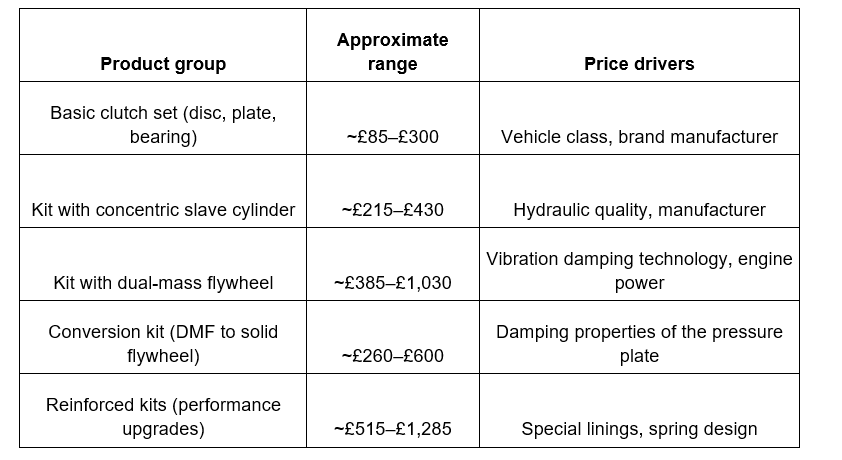
Brands such as Sachs, LuK, and Valeo offer proven repair solutions, and established original equipment manufacturers generally provide more precise fitment and documented friction values than unbranded alternatives.
Other checks worth doing at the same time
If a clutch kit is being replaced because of premature release bearing failure, it is worth checking a few related components while the gearbox is already removed:
- gearbox oil, replaced according to manufacturer specifications
- the crankshaft oil seal, often accessible directly behind the clutch and almost cost-neutral to replace at this stage
- the guide sleeve for the release bearing
- clutch hydraulic fluid, where applicable
Replacing the crankshaft oil seal at the same time prevents an oil-related failure of the newly fitted clutch shortly after the repair.
Keeping the clutch pedal pressed at a red light does not spare the mechanism, it wears out the release bearing through hours of unnecessary contact under load. The fix costs nothing and takes no extra time: shift into neutral, rest your foot on the floor, and only cover the clutch when you are genuinely about to move. This one change, kept up consistently, is one of the simplest ways to get the full service life out of a clutch kit before a replacement becomes necessary.








Weather in Bristol
Listings